


PACCAR and Litigation Funding Agreements – What Next?
In our previous Commercial Law Bulletin in December 2023, we provided an analysis of the groundbreaking judgment in R (PACCAR Inc and Others) v Competition Appeal Tribunal [2023] Costs LR 1193 (PACCAR) which the Supreme Court delivered on 26 July 2023. The decision concerned litigation funding and the extent to which (if at all) Litigation Funding Agreements (LFAs) are enforceable, that is to say, valid for the purpose of providing financial support for a legal action brought by a claimant, either in return for a share in the damages recovered in a successful case, or as a multiple of the sum invested in the case.
Matters have now moved on. This article explains what has happened since the judgment and that in particular, how and why the government has become involved.
PACCAR- bite-sized resume
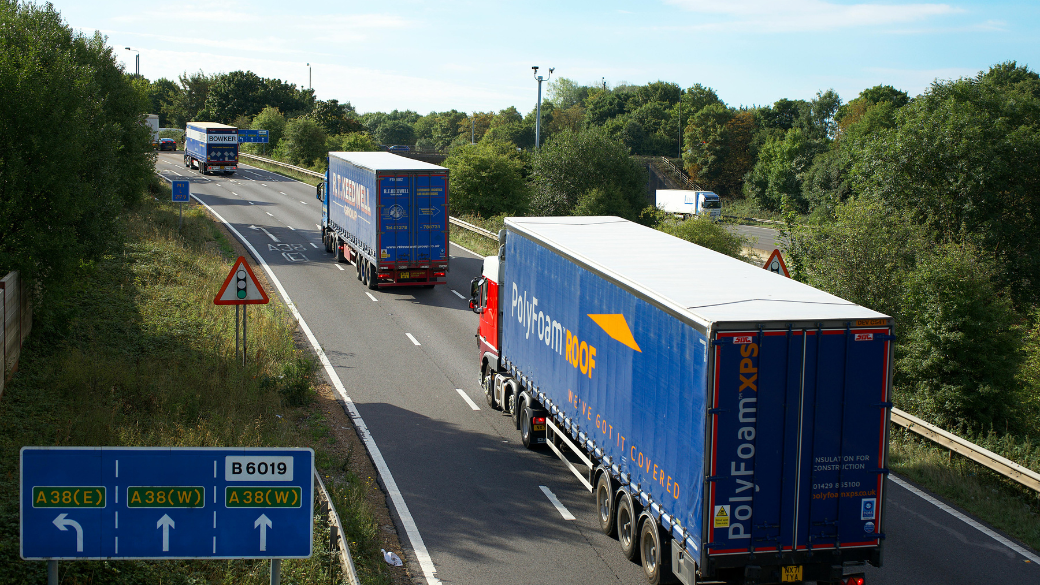
The Claimants in PACCAR belong to a group action brought against Truck Manufacturers, who engaged in unlawful anti-competitive collusion the European Economic Area, thereby inflating the price of the trucks that they sold between 1997 and 2011. They now seek compensation in collective proceedings in the Competition Appeal Tribunal (CAT) for overpaying the Truck Manufacturers for the vehicles they purchased.
Life before PACCAR
In the CAT, collective proceedings require the CAT’s permission to proceed. To do so, claimants must prove that adequate funding exists, not only to cover their own costs, but also those of the opponent if the litigation fails. LFAs can be “opt-out” if members do not wish to be represented, or “opt-in”, where members wishing to participate, opt-in to the class it represents. Until PACCAR, LFAs were accepted as a popular vehicle with which to provide such proof.
Another recognised vehicle which has enabled parties to fund litigation have been Damages Based Agreements (DBAs) which are authorised under s.58AA Courts and Legal Services Act 1990 (CLSA). Instead of being paid on a conventional hourly rate, the solicitor is permitted to conduct the case for a fee contingent upon the outcome and based upon a percentage of the damages, provided that the DBA also complies with the Damages Based Agreements Regulations 2013.
Until PACCAR, it was taken as read that the DBA Regulations did not apply to LFAs where third parties had funded the litigation because such agreements were not DBAs. Section 47C(8) of the Competition Act 1998 was therefore irrelevant (which provides that a DBA “… is unenforceable if it relates to opt-out collective proceedings”) because no mention is made in the section that a LFA would also be also unenforceable.
Life after PACCAR
PACCAR changed all that. As a preliminary issue, the Supreme Court accepted the Truck Manufacturers’ argument that the definition of a DBA in s.58AA includes an agreement which provides “claims management services”. Since the funders had been providing “financial services or assistance”, which is one of the examples of claims management services given in the statutory definition, the LFAs were DBAs falling within s.58AA of the 1990 Act. It followed that opt-out LFAs were caught by s.47C(8) and were unenforceable and could no longer satisfy the funding requirements for a collective proceedings order. By concession, it was also accepted that the opt-in LFAs could not do so either, as the LFAs had not been drafted with the DBA Regulations in mind, and neither complied with them.
The Fallout
The consequence of the judgment has been to put a spanner in the funding works in collective proceedings, not only so far as ongoing cases are concerned, but also in relation to those which have ended. Looking at each in turn :-
(1) As between funders and those parties who they have funded :-
Where the case is over and damages have been recovered, it is now open to claimants to argue that they, the claimants, can keep the spoils of victory because the terms of the LFA can no longer be enforced against them. Therium Litigation Funding A IC v Bugsby Property LLC [2023] Costs LR 1641 is a case in point. The claimant, Bugsby, won the case and recovered £27,636,512, albeit substantially less than the damages claimed. However, payments claimed by the funders and by Bugsby’s former solicitors, were likely to exhaust these damages, so Bugsby would receive nothing. Little wonder in that case, that Bugsby subsequently contended that the funder’s claims could not survive the decision in PACCAR. If that be right, the damages recovered, will belong to Bugsby.
However, the issue is not as straightforward as that. There are plenty of grey areas and scope for argument. For example, can a clause which offends against PACCAR, be severed, thereby leaving the rest of the agreement valid and enforceable? In Diag Human SA v Volterra Fietta [2023] Costs LR, the Court of Appeal said “No” but that was in the context of a Conditional Fee Agreement, not a DBA.
What, too, of unjust enrichment? Should a successful claimant keep all the damages and not even return to the funder, at least its outlay for the cost of financing the case? Not quite on the point, but in Diag Human, the court held that it would not be unjust enrichment for the client to have had all the work on the case done for nothing: anything billed and paid was to be returned to the client because the solicitors could not recover through the back door, what they were unable to receive through the front.
(2) As between funders and those parties where the case is not over :-
In this situation, there will have been no falling out over who should have first snout in the damages trough. To prevent that, the guidance of the CAT is being sought so far as the validity of LFAs is concerned. In Mark McLaren Class Representatives Ltd v MOL (Europe Africa) Ltd [2024] CAT 10, a revised LFA was presented to the tribunal which included two bases upon which the funder’s fee could be calculated : a fixed fee based on the funder’s outlay or in the alternative, a percentage of the “proceeds” of the litigation, made conditional upon that mechanism being enforceable and permitted by the applicable law. The Tribunal expressed itself satisfied that the revised agreement was not a DBA for the purposes on s.58AA and was not unenforceable under s.47C(8). It followed that the class representative and its funding arrangements met the relevant authorisation criteria to proceed with the claims.
The upshot of all this is uncertainty. If funders cannot be confident of getting a good return on their investment, they will leave the market, an eventuality which would be unwelcome for the government, eager as it in election year to bolster its own propaganda that “Access to Justice” is open to all, with there being so many different ways available to prospective litigants wishing to bring claims.
The government rides to the rescue?
With the Horizon scandal firmly in the public eye following the televising of Mr Bates v the Post Office, in which the sub-postmasters brought and won their case only through the availability of Third Party Funding, the government has stepped in with uncharacteristic speed!
On 4th March, the lord chancellor, Alex Chalk KC MP, announced that PACCAR would be reversed through the passing of new legislation which would make it :-
‘…easier for members of the public to secure funding for their legal fights against powerful corporations – such as those caught up in the Horizon scandal…It’s crucial victims can access justice – but it can feel like a David and Goliath battle when they’re facing powerful corporations with deep pockets. This important change will mean more victims can secure vital third party funding to level the playing field and support their fight for justice. The sub-postmasters were able to secure third party funding in their legal action against the Post Office. Now others will too.’
The solution?
Like making Rwanda a safe country by passing legislation to say that it is, contrary to the findings of the Supreme Court, just do the same for PACCAR!
Here, simplicity would be the key. Keep it short! Pass legislation called the Litigation Funding Agreements (Enforceability) Act 2024 and all will be well!
The bill currently with the House of Lords, says this :-
“1 Enforceability of litigation funding agreements
(1) Section 58AA of the Courts and Legal Services Act 1990 (enforceability of damages-based agreements) is amended as follows.
(2) In subsection (3), after paragraph (a) insert
“, but (aa) an agreement is not a damages-based agreement if or to the extent that it is a litigation funding agreement……
(4) The amendments made by this section are treated as always having had effect.”
Job done? Far from it. The retrospective clause has stirred up a hornets’ nest.
The Ministry of Justice is already being threatened with judicial review by business users of litigation funding, who say that the retrospective effect will deprive them of the right to retain the proceeds of their litigation claims (such as in the Bugsby action). Not only that, if the Bill is passed, it will violate their rights under European Convention on Human Rights under article one of protocol 1 and the right to a fair trial under Article 6.
In this context, it is not only business users such as Bugsby who will be adversely affected. Consider the case of the sub-postmasters. According to the TV drama, of the millions of pounds recovered, individually each sub-postmaster ended up with under £30,000 after years of litigation, because the funders took the rest. If the Bill becomes Law, it will further restrict those sub-postmasters from seeking further redress in respect of the significant deductions which were made from their compensation under the terms of funding agreements, which lacked legality following the decision in PACCAR.
Not a happy prospect, irrespective of whether you are on the side of the funders or the parties they have been funding. The Bill is expected to become law before Parliament rises for the summer vacation, unless there is a general election first. Continue to watch this space!
Author, Colin Campbell, was a Costs Judge at the Royal Courts of Justice from 1996 to 2015 and before that, he sat as a Deputy Taxing Master from 1993 until taking up his permanent appointment. He was also a Costs Officer of the United Kingdom Supreme Court and of the Judicial Committee of the Privy Council from 2010 to 2015. In private practice, he was a partner in a London Solicitors’ practice specialising is commercial litigation. In 2011, he was called to the Bar. Following retirement, Colin now works for Kain Knight as a consultant. His role is to oversee the strong emphasis on learning and development, both internally and externally, and to ensure everyone in the firm is abreast of costs case law and practice developments.

Colin Campbell
Consultant to Kain Knight
Telephone: 01279 755 552
Kain Knight
Bentfield Place
Bentfield Road
Stansted
Essex
CM 24 8HL

